
Backyard Storage Without the Monthly Bill.
One purchase. No renewal notices. No unit fee increases. Weatherproof storage that lives on your property, not in a facility across town.
We deliver 20ft and 40ft containers to homes across Ohio, Indiana, Kentucky, and western West Virginia, direct from Cincinnati. They work for suburban driveways, side lots, gravel pads, and larger properties where a shed simply is not enough.
Delivered within 250 mi of Cincinnati · Quote in 4 business hours · No monthly fees, ever
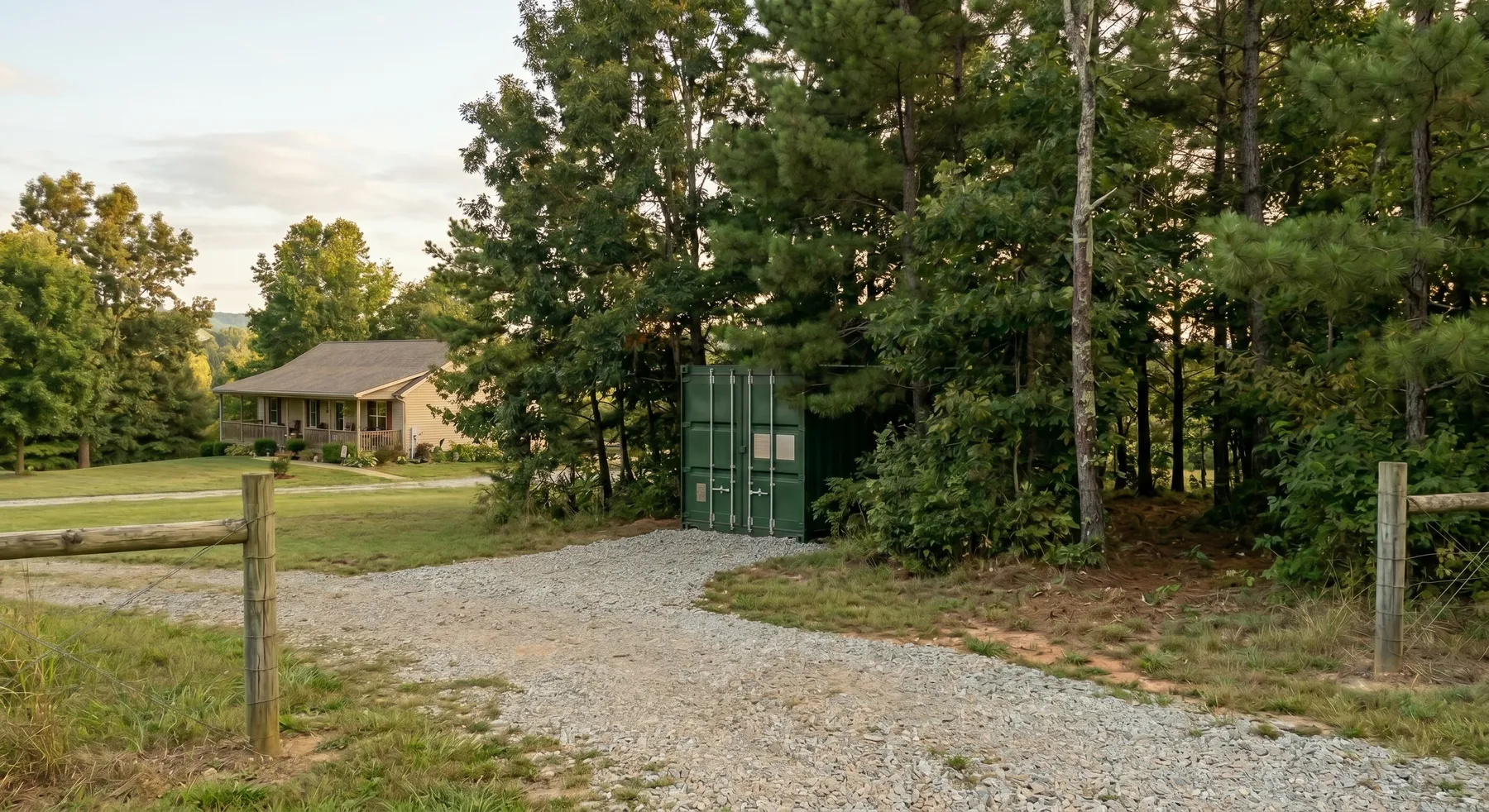
Why containers work for homeowners
A shipping container solves the same problem as a rented storage unit or a backyard shed, but it does it once, for a single price, on ground you already own. Here's why homeowners across the Cincinnati region keep choosing steel over a recurring bill.
Own it instead of renting it
A standard 10×10 self-storage unit runs about $120 per month on the national average. Over five years, that's roughly $7,200 in fees for a space you never own, that you have to drive to, and that tends to raise its rate over time. A 20ft container is a one-time purchase of $1,980 today (roughly $33 per month if you spread it across the same five years) and it belongs to you permanently. There is no renewal notice and no annual increase. When you no longer need it, you can resell it: steel holds its value because it doesn't rot, warp, or depreciate the way a wood shed does. For anyone storing longer than two or three years, the math runs strongly in favor of ownership.
Based on the national average; storage rental prices vary by region. Container pricing reflects current market · updated September 2026.
More secure than a shed, more accessible than a storage facility
A shipping container is built from weathering (Cor-Ten) steel, the same steel used to cross oceans loaded with freight. There's no OSB, no vinyl skin to cut through, no plastic windows, and no flat roof to pool water and rot. The double cargo doors close onto a steel hasp built for a padlock or a puck lock, so the most vulnerable point on a typical shed simply isn't there. And because it sits on your property, access is yours alone: no facility gate code, no business hours, no drive across town at 9pm when you remember the camping gear is in unit 214. You open the doors when you want them open.
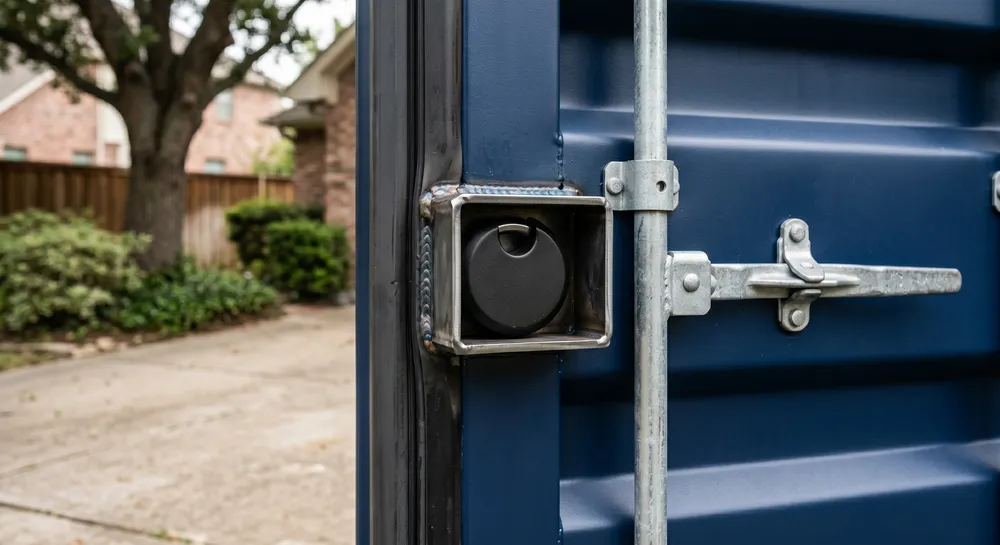 Photo · Container door with puck lock
 A 20ft container fits most suburban properties
The most common residential size is the 20ft container: 8 feet wide, 8'6" tall, and 20 feet long, about the footprint of two standard parking spaces parked end to end. Most suburban driveways and backyards in Ohio, Indiana, Kentucky, and western West Virginia can take a 20ft unit without any special site work. What matters more than the footprint is the approach: the delivery truck needs roughly 50 feet of clear, reasonably level run to back in and tilt the container off. A standard residential street is usually enough. Low branches, tight gate posts, and soft spring ground are the things to flag, and we'd rather hear about them before delivery day than discover them on it.
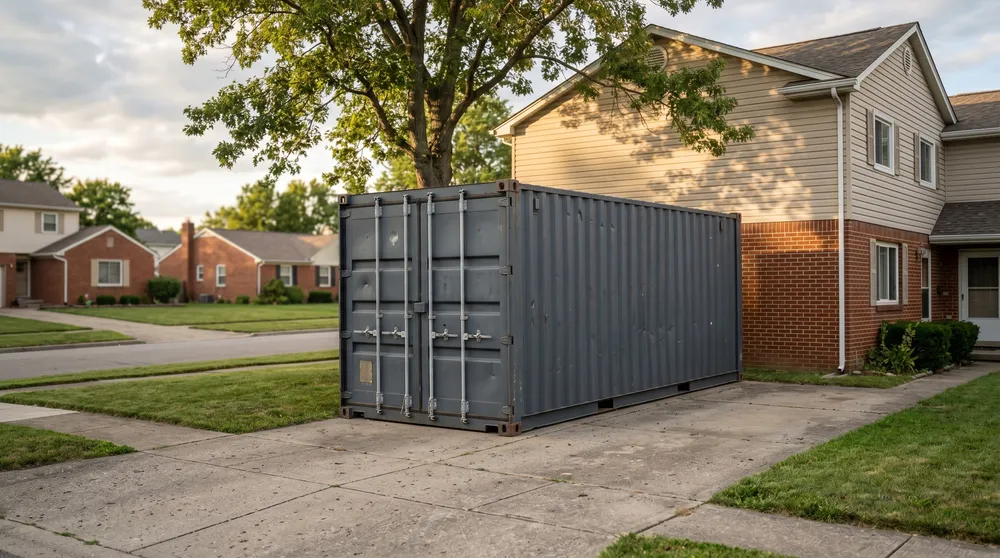 Photo · 20ft container on a suburban driveway
 Permit requirements vary, so confirm yours before you buy
Some municipalities require a zoning permit for a storage container; many don't. Agricultural and unincorporated properties are often treated differently from residential lots inside city limits; in Ohio, for example, the agricultural zoning exemption (OSU Extension) addresses buildings used in agriculture. Residential lots inside city limits are the most likely to need a permit, and the rules differ from one town to the next: some set a size threshold, some require a setback from the property line, some have no rule at all. These are general references, not a determination for your property. The reliable answer comes from your county auditor or zoning office, and confirming it before you purchase is the buyer's responsibility. We do not determine, advise on, or guarantee permit requirements.
Rent vs. own, over five years
Renting a standard 10×10 storage unit costs about $120 a month on the national average, and tends to climb over time. Buying a 20ft container is a single payment of $1,980 (about $33 a month spread over five years), after which you own an asset you can resell.
| Over 5 years | Rent 10×10 storage unit | Own 20ft Wind & Water Tight container |
|---|---|---|
| What it costs | ~$120 / month | $1,980 one time (~$33/mo over 5 yrs) |
| 5-year total | ~$7,200 in fees | No monthly fee · no annual increase |
| Rate over time | Rises most years | Fixed; you already paid |
| Access | Drive to it · facility hours | On your property · access anytime |
| At the end | Own nothing | Resells; steel holds value |
| The tradeoff | Climate control included | Needs outdoor space · no HVAC for climate-sensitive items |
Container pricing reflects current market · updated September 2026. Storage-unit figure is the national average (rental prices vary by region) and is not a Steel Box Direct rate.
The table above compares a container against a self-storage unit. If the comparison you are actually weighing is renting a container against buying one, the rent vs buy calculator runs both columns on your own timeline and finds the month the two totals cross.
There's a third path: rent to own a container over 12, 24, 36, or 48 months (no traditional credit check, subject to third-party approval) and own it outright at the end of the term. From September 1, 2026, My Container Rental sets what you put down to start that term: $99 applies to standard containers delivered within 150 miles of the depot your container ships from; 20% down beyond that. The down payment terms in full.
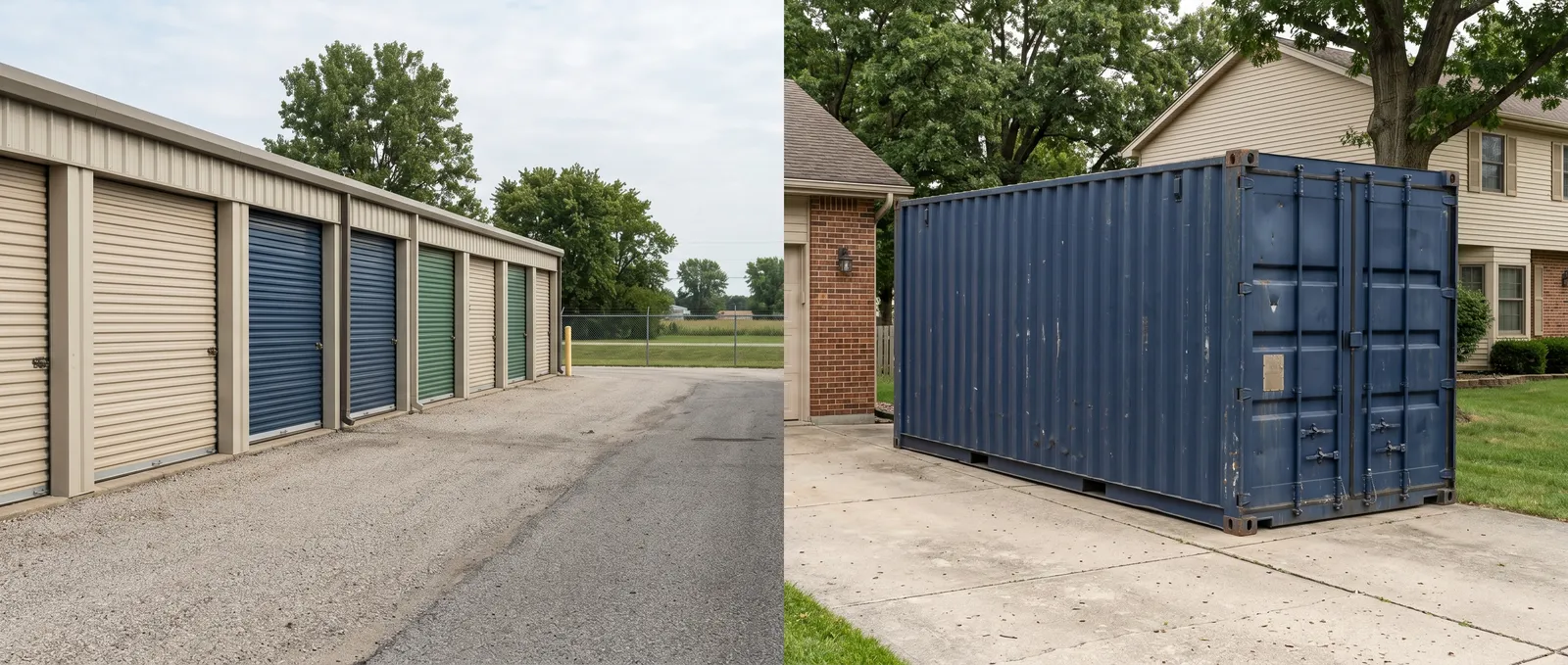 Photo · Storage units vs owned container
 Which container fits your situation
Three sizes cover almost every home use. Here's the quick way to choose.
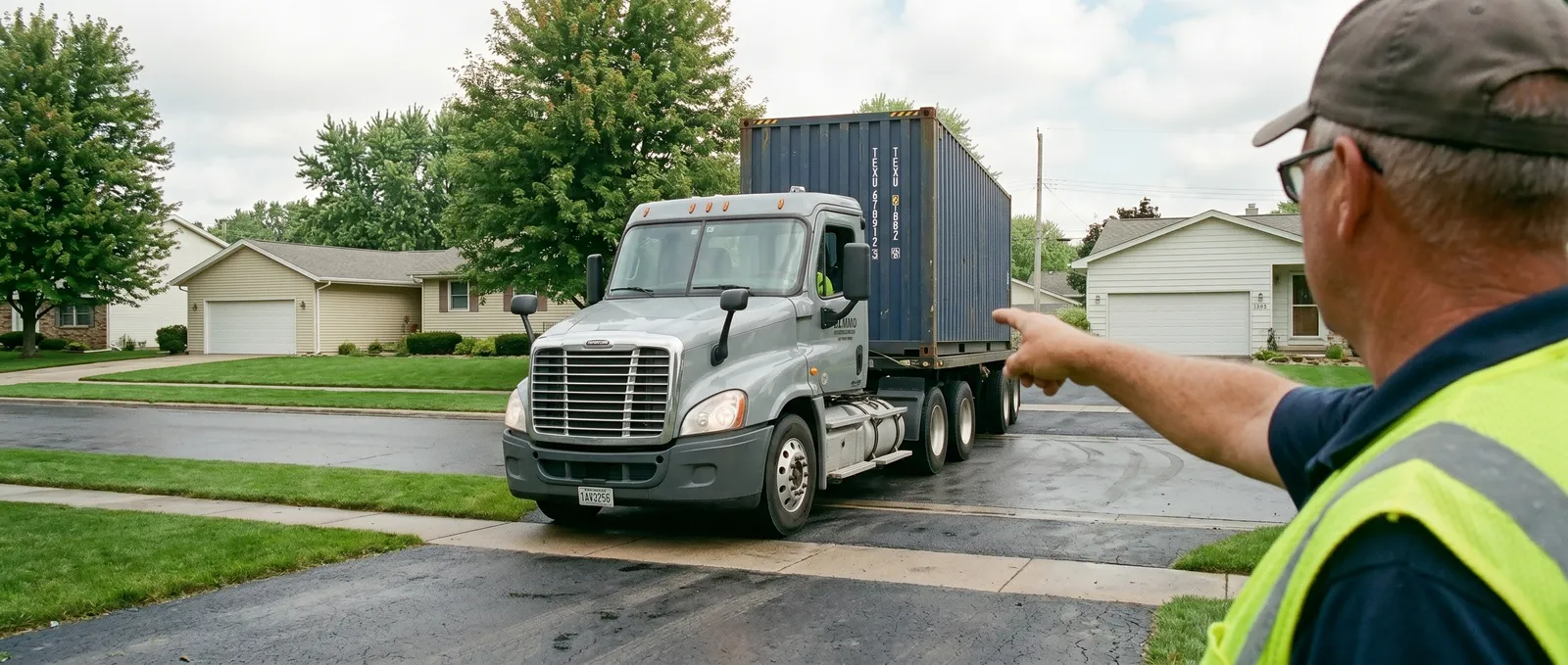 Photo · Tilt-bed container home delivery
 Best for: most residential properties. Fits the footprint of a large shed and holds about what a two-car garage holds: lawn equipment, seasonal decor, furniture between moves, the overflow from a finished basement. Sits on most driveways and backyards without special site prep.
View 20ft container → 40ftBest for: larger lots with a full driveway or a dedicated storage spot. Roughly twice the capacity of a 20ft, and the right call if you're storing a vehicle, a workshop's worth of equipment, or a whole household mid-renovation. Needs a longer, straighter approach for delivery.
View 40ft container → 40ft HCBest for: tall storage and conversions. A full foot of extra interior height over a standard 40ft (about 2,694 cubic feet) for stacked storage, tall gear, or a build where headroom matters. Wind & Water Tight (used): structurally sound, weather-tight steel.
View 40ft High Cube →Most homeowners choose the 20ft. It fits most driveways and backyards without special placement planning.
Where we deliver
We deliver to driveways, backyards, and side lots within 250 miles of Cincinnati, across Ohio, Indiana, Kentucky, and western West Virginia (Huntington, Charleston, Parkersburg). If you're in or around one of these metro areas, a residential delivery is routine for us; if you're between them, you're very likely still in range. These are the markets we serve most:
Common questions
Will a 20ft container fit in a standard suburban driveway?
Usually, yes. A 20ft container is 8 feet wide and 20 feet long, roughly the footprint of a large SUV and a half-car length. Most standard suburban driveways are wide enough, though placement depends on attached garages, fence lines, or utility setbacks. More important than the footprint is delivery clearance: the truck needs about 50 feet of unobstructed approach. A standard residential street with traffic is typically workable. Include your address when requesting a quote and we can assess the approach.
Do I need a permit to have a shipping container on my residential property in Ohio?
It depends on your location and intended use, and confirming it is the buyer's responsibility before purchasing. Rules differ widely from one jurisdiction to the next: some municipalities require a permit, some set a size threshold, some have setback rules, and some have no restriction at all; agricultural and unincorporated properties are often treated differently from residential lots inside city limits. The reliable way to find out is to call your county auditor or zoning office and confirm what applies to your property. We do not determine, advise on, or guarantee permit requirements.
How does delivery work in a residential neighborhood?
A tilt-bed truck backs in, tilts, and slides the container into position. We minimize impact on neighboring traffic, but neighbors may need to move vehicles temporarily if the approach is tight. For a typical residential delivery we don't need a street closure, and the truck works from your driveway and the apron. Whether your city requires a permit to stage or work in the public right-of-way is a municipal rule, and confirming it is the buyer's responsibility. If your street has weight limits or parking restrictions, mention that when you request a quote.
How does buying a container compare to renting a storage unit long-term?
The math usually favors ownership for anything beyond 2-3 years. A standard 10×10 self-storage unit averages about $120 per month nationally and tends to increase over time, though prices vary by region. Over 5 years, that's roughly $7,200 in fees for space you never own. A 20ft container is a one-time purchase of $1,980 today, far less over that horizon, and you can sell it when you're done. The container also holds more than a 10×10 unit and sits on your property. The tradeoff: you need the outdoor space, and a storage facility protects climate-sensitive items better since containers have no HVAC.
Can I add shelving, electricity, or other modifications to a container?
Yes, containers are commonly modified for exactly this purpose. Shelving, racking, vents, and interior lighting are all routine fabrication work, and a free-standing shelf unit set on the floor sidesteps the question of what the walls will take. We take no position on attaching anything to the walls or the roof: how much a given wall will hold, and what fastener belongs in it, are questions for the container manufacturer or a licensed engineer. Electrical can be run from your home's panel to the container if it's placed within practical distance, and a licensed electrician can wire a standard outlet and light. We don't sell modified containers, but we can point you toward local fabricators who handle electrical, shelving, ventilation, and insulation.
What does a container sit on, and do I need a foundation?
No foundation is required. A container rests on its four corner castings, so most homeowners set a concrete block, a railroad tie, or a paver under each corner to keep it level and lift the steel floor off wet ground. Level, firm ground is all you need: a driveway, a gravel pad, or compacted grass. Pouring a slab is optional, and it generally only matters if you're planning a conversion or a build on the spot. Sitting on blocks instead of a slab is a placement decision, not a legal one. Whether a container needs a permit on a residential lot, and how your city or county classifies it, is decided by your local zoning or building office, and an HOA can add rules of its own on top. What usually drives the answer is the size of the unit, how close it sits to a property line, how long it stays, and whether you're converting it into finished space. Getting that answer for your own address before you buy is the buyer's responsibility. We do not determine, advise on, or guarantee permit, zoning, or HOA requirements.
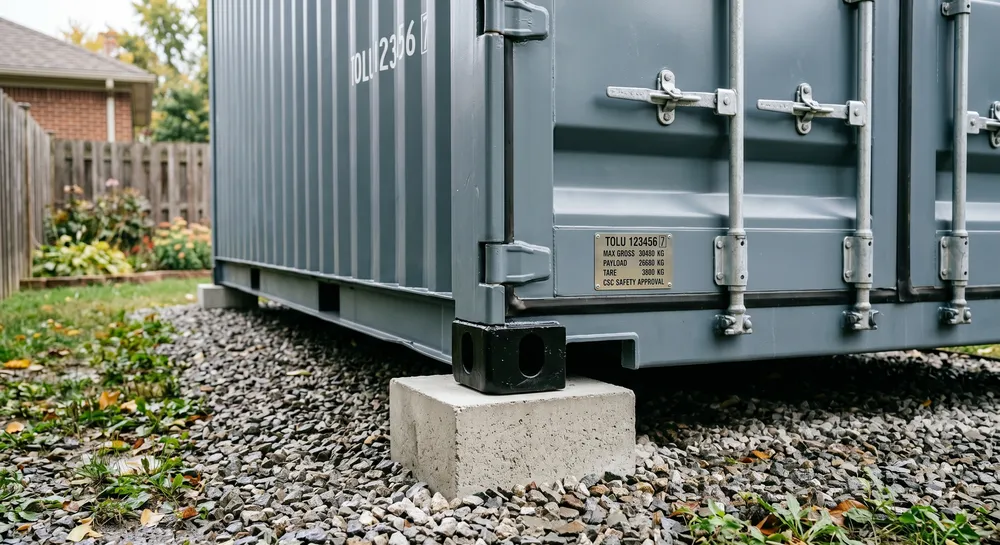 Photo · Container on pier block, no foundation
 Will my stuff get damp or moldy inside a steel container?
It can if you don't plan for it. Containers are weathertight against rain and snow, but a sealed steel box with no airflow can build condensation when warm, humid air meets cold steel, sometimes called "container rain." The fix is simple: add a couple of passive roof vents or louver vents for cross-flow, keep items off the floor on pallets or shelving, and toss in moisture-absorber buckets for anything sensitive. For most home storage (tools, furniture, equipment, seasonal items) basic ventilation is plenty. Climate-sensitive belongings (electronics, paper, anything that fears humidity swings) are still better off in a conditioned space, since containers have no HVAC.
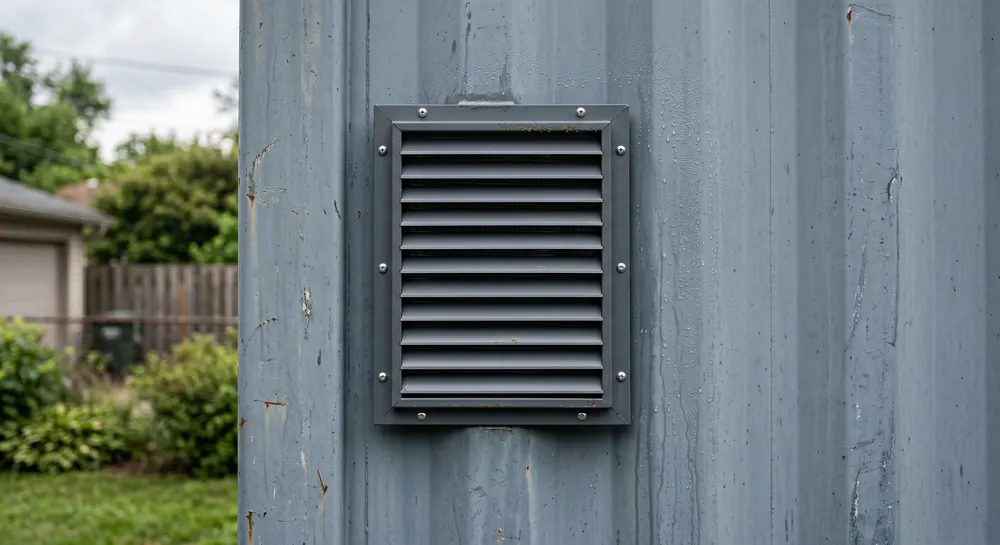 Photo · Container vent reduces condensation
 Is a shipping container a good alternative to a storage shed?
For most homeowners, yes, especially for security and durability. A shed is easier on the eyes and blends into a backyard, but it's wood or vinyl over a light frame with a basic latch, and it can rot, leak, and let rodents in over the years. A steel container is Wind & Water Tight, seals against weather and pests, and locks with a puck-lock hasp that's far harder to defeat than a shed door. The tradeoffs are the boxy, industrial look and confirming local zoning for placement. For a workshop-style building you want to spend time inside, a shed or small pole barn may suit better; for locking up tools, equipment, and overflow that has to survive outside, the container is the tougher, longer-lived option.
Will a steel container last longer than a wooden or plastic shed?
By a wide margin. A wood or vinyl shed typically degrades over the years: the roof pools water, the frame swells and warps, and the resale value drops toward zero. A shipping container is built from weathering (Cor-Ten) steel engineered for decades of open-ocean freight; sitting on dry ground in the Midwest is easy duty. Keep it off wet ground on blocks or a gravel pad and touch up any scratches, and a Wind & Water Tight unit holds its structural and weathertight integrity (and much of its resale value) far longer than a shed.
Does my HOA or city allow a shipping container in a residential backyard?
That varies widely, and confirming it is the buyer's responsibility before purchasing. Some municipalities allow residential containers outright, some set a size threshold or a setback from the property line, some require a permit, and some prohibit them on residential lots; an HOA can add its own rules on top of local zoning. Agricultural and unincorporated properties are often treated differently from lots inside city limits. The reliable way to know is to check with your county or city zoning office and your HOA before you buy. We do not determine, advise on, or guarantee permit or HOA requirements.
Curious what the markings on a container mean? Our Container Reference decodes them.
Planning what goes inside? Read why containers “rain” inside, and the simple fixes, and see 12 things you shouldn’t store in a container.
- Self-storage pricing: SpareFoot, "How Much Does a Storage Unit Cost?"
- Container steel: Weathering (Cor-Ten) steel
- 20ft container dimensions: Shipping Container Depot
- Storage shed vs shipping container comparison: Conexwest
- Ohio agricultural zoning exemption: OSU Extension (ORC §519.21)
Ready when you are
Get a quote for your property.
Tell us your delivery zip, the size you're considering, and where it's going on the lot. We'll confirm the approach and get you an all-in delivered number within 4 business hours. Permit and zoning confirmation is up to you and your local authority.