
Home / Rent vs Buy Calculator
Rent or buy a container?
Find your break-even month.
Renting and buying are not two prices for the same thing.
They are two different deals that end in two different places, and the only way to compare them is over your real timeline, not per month. This page does that one sum. Put in the rental rate you were actually quoted, put in what a container would cost you to buy, and it tells you the month where the rental has cost more, and what happens to the money after that.
Steel Box Direct sells containers, so we have an obvious interest in how this comes out. Which is why the page is built to give you the other answer when the other answer is right. Put in a short timeline and it will tell you plainly that renting wins, and send you to our list of rental companies instead. If that is your situation, go rent. We would rather be the page that told you the truth than the page that got you on the phone.
At what month has the rental cost more than buying?
This multiplies your rental quote out across the calendar and compares the running total against a purchase price. Nothing is sent anywhere, nothing is saved, and there is no sign-up. Use the numbers on your own written quote. If you do not have a purchase quote yet, you can start from our average starting prices, which are averages and not offers.

Delivery and pickup are usually charged separately
In this industry the monthly rate is the monthly rate, and the truck that drops the container off and the truck that comes back for it are their own line items. That is why there are two one-time fee boxes below. If your written quote says one of them is included, put 0 in that box.
Our average already contemplates delivery
There is no purchase delivery box, and that is deliberate. A Steel Box Direct quote comes back as one all-in delivered figure, and the average starting prices below already contemplate delivery, which is the biggest thing that moves them. If you are comparing another seller's price, ask them whether theirs is delivered or whether freight is added.
- Take the one-time fees on your rental quote, the delivery charge plus the pickup charge, and add them together.
- Subtract that total from the price of buying a container.
- Divide what is left by the monthly rental rate.
- Round up to the next whole month. That is your break-even month.
Example of the shape, using numbers that divide cleanly so the arithmetic is easy to follow: one-time fees of $225, a purchase price of $2,475, and a monthly rate of $150. Two thousand four hundred and seventy five minus two hundred and twenty five is two thousand two hundred and fifty. Two thousand two hundred and fifty divided by one hundred and fifty is fifteen. Renting passes buying in month 15, and every payment after that is money spent on a container you will hand back.
Then ask yourself the only question that matters: will you still need it in month 15? If the answer is no, rent. If the answer is yes, or you do not know, price both.
Every box starts empty on purpose. The rate should come off your own written rental quote, not off a figure we chose for you. The size dropdown is the one shortcut here, and it fills in an average, not a quote for your address.
Enter a monthly rate and a purchase price
Put in the monthly rate you were quoted and what a container would cost to buy. The month where the rental total passes the purchase price appears here.
The purchase price above came from our size dropdown. These are average starting prices, not quotes. What you pay can land above or below, depending mostly on how far we deliver and current market supply. Average as of September 2026
The purchase side above assumes the whole price is paid in month one. Rent-to-own is the version where it is not. From September 1, 2026, My Container Rental, the independent third party that administers the program, asks $99 at signing, then a fixed monthly payment over 12, 24, 36, or 48 months, and the container is yours once the term is finished.
$99 applies to standard containers delivered within 150 miles of the depot your container ships from; 20% down beyond that. Approval belongs to them rather than to us. See the rent-to-own down payment terms
You do not need the rest of this page. Here is where to rent in Ohio, Indiana, Kentucky, and West Virginia, including the nine questions worth asking any rental company before you sign.
This is arithmetic, not advice. It compares two totals, and totals are only one part of the decision. Read the next two sections before you act on the number, because the break-even month leaves several real costs out and it cannot tell you whether you will still want a container in your yard a year from now.
Three things this deliberately does not do. It does not guess at a rental rate or a purchase price for you, because we do not have your quotes in front of us. It does not add site prep, relocation, or anything the container gets used for, which are listed further down. And it does not put a resale value on the container you would own, because that depends on its condition and on the market on the day you sell, and nobody can tell you that in advance.
The break-even month is a line, not a verdict
The break-even month is the point where the money you have handed a rental company matches what buying the same container would have cost. It is a real line and it is easy to check: rate times months, plus the one-time fees, against the purchase price. Nothing clever happens at that number. What changes is what each additional payment is doing. On the day before the break-even, renting is the cheaper way to have a container. On every day after it, you are paying for a container you have already covered the cost of, and the payments do not stop on their own, because an open-ended rental has no last payment on the calendar.
That is the whole of what this number tells you, and it is worth being clear about the rest. It does not know your rate will hold. Rental rates can change, and if yours goes up the break-even arrives earlier than the tool says. It does not know whether you would actually want to own a container, keep it maintained, and deal with it when the need ends. It does not know how far you are from a depot, which moves the purchase side. And it does not account for the fact that money spent later is easier to carry than money spent today, which is a genuine argument for renting and one this page is not going to pretend away.
Use the break-even as a filter. If your need clearly ends before it, rent. If your need clearly runs past it, price buying properly instead of assuming.
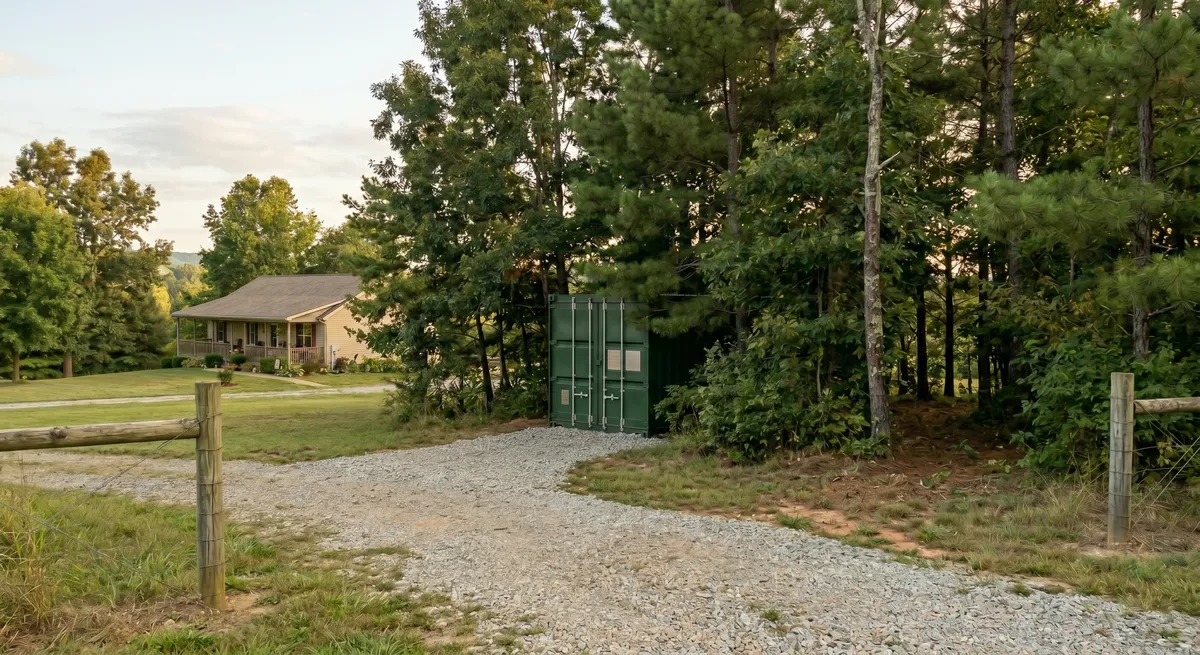
There is a separate, structural argument about what you are actually holding when the payments stop, and it is not repeated here. Read it on the container rental guide.
Six times renting beats buying, and we mean it
We sell containers. We do not rent them. That makes this the section you should trust least and read most carefully, so here it is without hedging. In every case below, renting is the better decision, and the break-even month above is beside the point.
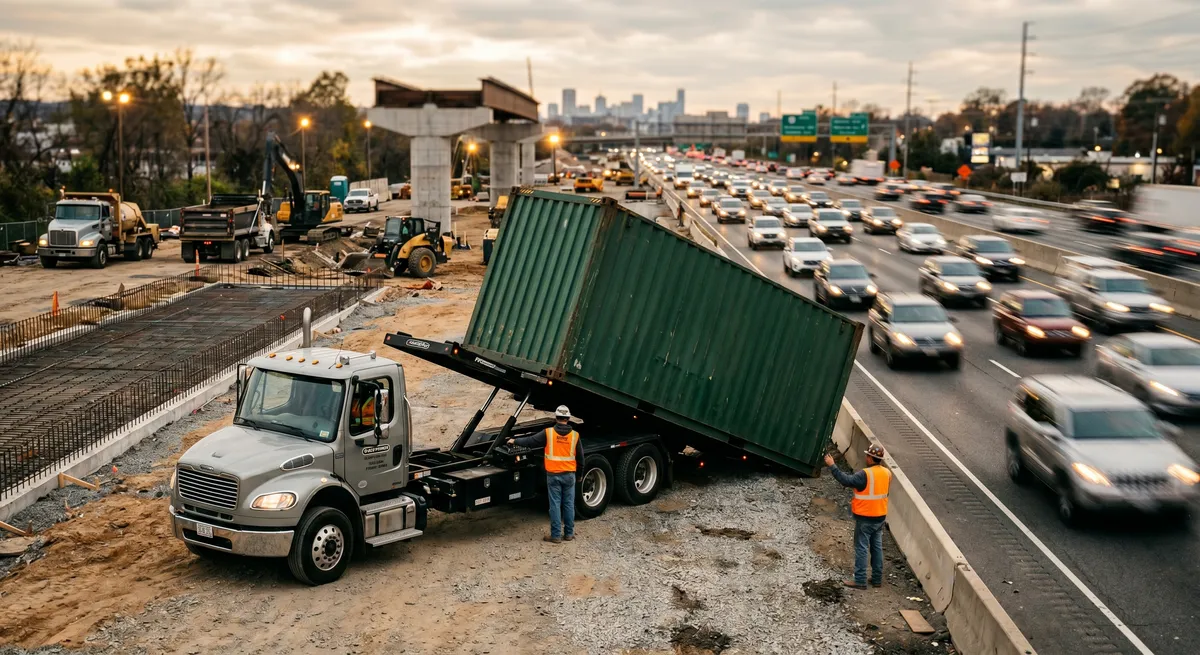
Case 1The job has an end date on a contract.
A build finishes. A remodel finishes. A season finishes. When there is a real date and you want the box gone on or near it, renting is the deal that matches. You pay for the window you need, somebody else hauls it away, and you never think about it again. Buying a container for a job that ends in ten weeks means owning a container in week eleven.
Case 2You will not control the site in six months.
Leased ground, a rented yard, a job on someone else's property, a site that reverts when the contract closes. Owning steel you cannot legally leave anywhere is not an asset, it is a problem you now have to move. Rent it, hand it back, walk off the site clean.
Case 3You need it gone and you do not want to arrange the disposal.
This is the underrated one. When a rental ends, the rental company sends a truck. When you are done with a container you own, getting rid of it is your project: find a buyer or a yard that wants it, agree a price, arrange the haul, and be there when it happens. If you know now that you will not want that job later, renting is buying your way out of it in advance, and that is a reasonable thing to buy.
Case 4You genuinely do not know if this will work.
You think a container solves your storage problem but you have never had one on the property. You are not sure the doors will open where you want to put it, or that you will like looking at it, or that the ground will stay firm through a wet spring. A short rental is a cheap way to find out before you commit, and finding out is worth paying for.
Case 5The cash matters more than the total right now.
Buying puts the whole cost at the front. Renting spreads a smaller number across the calendar. If the up-front number is the thing standing in your way this month, then the lower monthly payment is not a worse deal, it is the deal you can actually do. Paying more over two years to not pay it all in one week is a trade plenty of sensible people make on purpose.
Case 6Your need is short and you already know it.
If you can name the month you will be done, and it lands before the break-even the calculator gave you, the arithmetic has already answered. Rent. Nothing further down this page changes that.
If any of those six is you, close this page and go rent. We keep a list of rental companies across Ohio, Indiana, Kentucky, and western West Virginia, checked on their own websites, with no paid placements and no lead form in the middle of it.
Where to rent a shipping container near you
Steel Box Direct does not rent shipping containers. We sell them, and we offer rent-to-own, where a fixed term of payments ends with you owning the container. So if the answer is renting, the answer is somebody else, and we would rather say that here than waste your phone call.
Six costs the calculator leaves out, on both sides
A break-even month made from two numbers is only as good as the two numbers. Here is everything the tool is not counting, listed on whichever side it belongs to, so you can add it yourself.
Six omissions, and what to do about each one. Scroll the table sideways on a small screen
| What is missing | Which side it lands on | What to do about it |
|---|---|---|
| Delivery to your site | Both. Rental delivery is usually a separate line item. On a purchase, ask whether the quoted price is delivered or whether freight is added. | Get the delivery figure in writing from both, and put the rental one into the calculator above. Our quotes come back as one all-in delivered number, so ask any seller for theirs the same way. |
| Pickup at the end | Rental only. There is no pickup on a container you own, because nobody is coming for it. | Ask what the pickup fee is and whether it is quoted now or set at the rate in effect on the day you call for it. |
| Site prep | Both, equally. Level ground, gravel, and blocking cost the same whichever way the container got there. | Price it once, then leave it out of the comparison, because it does not move the break-even. It does move your total. |
| Relocation | Both. Moving a container after it is set is its own job and its own bill. | On a rental, ask for the move fee up front. On a container you own, it is your arrangement to make, so get a haul quote before you assume it is easy. |
| Getting rid of it at the end | Purchase only. A rental ends by itself. A container you own ends when you decide it does. | Decide now whether you want that job later. If you do not, that is a real argument for renting, and it is Case 3 above. |
| The container as an asset | Purchase only, and the calculator gives you no credit for it. | A container you own can be sold when the need goes away, and one you rent cannot, because it was never yours. We are not putting a number on that, and neither should anyone else. What it would fetch depends on its condition and on the market on the day you sell. |
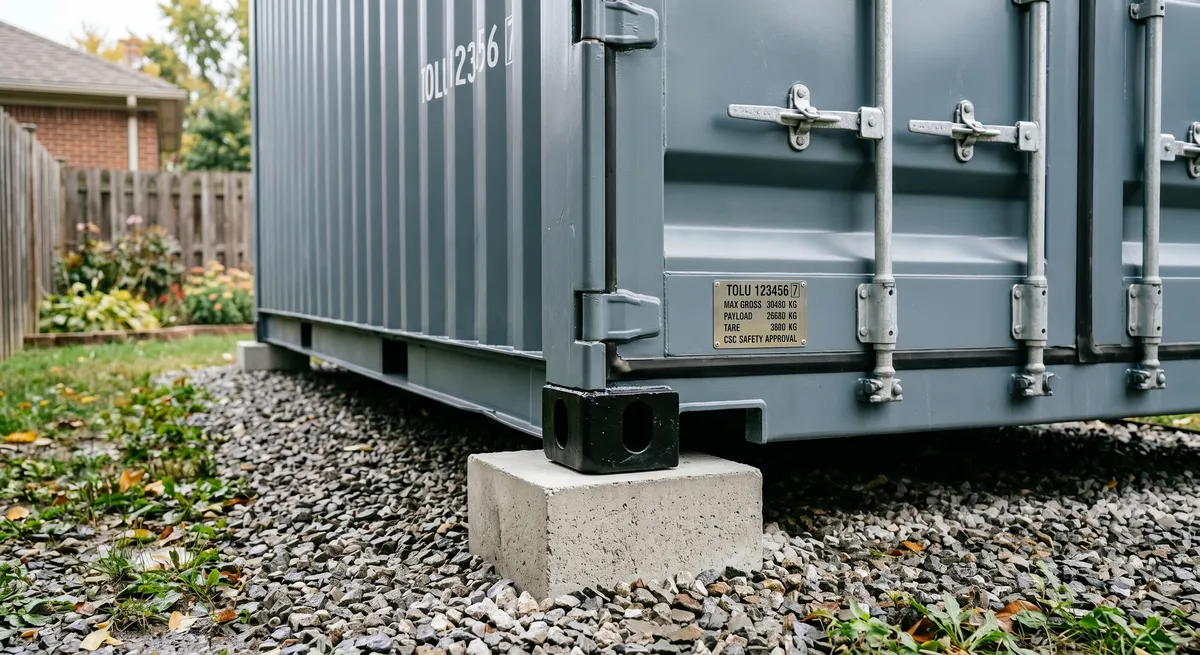
Two of those cut against buying and one of them cuts for it, which is roughly how an honest comparison usually lands. The two that cut against buying are the up-front cash and the disposal job at the end. The one that cuts for it is that the break-even month treats a container you own as worth nothing, and it is not worth nothing, it is a steel box standing on your property that somebody will want. We are deliberately not modelling that, because the moment we put a resale figure in the tool we would be selling you something instead of adding up your quote.
Whether a container is allowed on your property, and whether anything needs to be filed first, is a matter for your local zoning or building department, and confirming it before delivery is the property owner's responsibility. Steel Box Direct does not make permit or zoning determinations. This applies the same way whether the container is rented or bought.
More on how to ask that questionUsed Wind and Water Tight containers, which means built to keep weather out, with a Lifetime Leak Warranty. Surface rust and cosmetic wear are normal on a used box. If you have a use in mind that turns on how much the steel can take, on a modification, or on holding weight overhead, that is a question for a licensed engineer or the manufacturer, not for us and not for a calculator.
Rent vs buy, answered straight
Is it cheaper to rent or buy a shipping container?
It depends entirely on how long you need it, which is why there is no single answer. Renting is cheaper up to a certain month, and buying is cheaper after it, and that month is set by your rental rate and the purchase price you can get. Work out where your break-even falls, then compare it against how long you actually need the container. If your need ends before the break-even, rent. If it runs past it, or has no end date at all, price buying before you sign an open-ended agreement.
At what month does renting a shipping container cost more than buying one?
Divide the purchase price by the monthly rental rate, after subtracting the rental's one-time delivery and pickup fees from the purchase price, then round up to the next whole month. That month is the break-even, the point where the rental has cost you what buying would have. There is no standard answer to quote, because rental rates vary by company and by market, and purchase prices move with condition, size, and how far the container has to travel. Use your own written quotes, not an average.
If you do not rent containers, why does this calculator price a rental?
Steel Box Direct does not rent shipping containers. We sell them, and we offer rent-to-own, where a fixed term of payments ends with you owning the container. The rental column exists because the comparison is useless without it, and the rate that goes into it is your own, off your own written quote, because we have no way to tilt it and no reason to. If the arithmetic says renting is the better call over your timeline, this page says so and sends you to our container rental guide, which lists the rental companies we were able to verify across Ohio, Indiana, Kentucky, and western West Virginia.
How do I calculate the total cost of renting a shipping container?
Multiply the monthly rate by the number of months you actually need it, then add the one-time delivery fee and the pickup fee. Pickup is the one people forget, because it is billed months later when the rental is already over. Ask for all three numbers in writing before you sign, because a monthly rate compared against another monthly rate is not a comparison.
When is renting a shipping container the better choice?
Renting is the better choice whenever your need has an end date, whenever you will not control the site long term, and whenever you want the container to disappear without arranging that yourself. A job with a completion date, a remodel, a season, a leased yard, or a first try at whether a container even solves your problem are all cases where renting is the deal that matches the situation. Renting also wins when the up-front cost of buying is the actual obstacle, because a payment you can make beats a total you cannot.
What does a rent vs buy calculator leave out?
It leaves out site prep, relocation, disposal at the end, and the resale value of a container you own. Site prep costs roughly the same either way, so it does not move the break-even month, but relocation and disposal fall differently on each side and can be significant. The largest omission is on the buying side: the calculator treats an owned container as worth nothing at the end, which understates buying, and we leave it that way rather than invent a resale figure that depends on condition and on the market on the day you sell.
Can I sell a shipping container after I buy it?
Yes. A container you own can be sold whenever the need goes away, and that option does not exist on a rental, because the container was never yours. What it would fetch depends on its condition and on the market at the time, and nobody can tell you that number in advance, so treat it as an option you hold rather than as money you are counting on.
How much does a used shipping container cost from Steel Box Direct?
As of September 2026, average starting prices are $1,980 for a 20ft, $2,370 for a 40ft Standard, and $2,340 for a 40ft High Cube. These are average starting prices, not quotes, and yours may be more or less, mostly depending on how far we deliver and on current market supply. We sell used Wind and Water Tight containers with a Lifetime Leak Warranty, and a quote comes back as one all-in delivered number.
These are average starting prices, not quotes. What you pay can land above or below, depending mostly on how far we deliver and current market supply. Average as of September 2026
However it came out
Whatever the number said, that is the number
If the break-even lands past your finish date, rent. That is the right call, our rental guide is the useful page for you, and we would rather you go use it than fill in a form here.
If it lands before your finish date, or your need never had a finish date to begin with, then it is worth getting a real purchase number instead of comparing against an average. Tell us the size and your delivery zip and you get one all-in delivered figure back, on a used Wind and Water Tight container with a Lifetime Leak Warranty, across Ohio, Indiana, Kentucky, and western West Virginia. If you would rather spread it, we offer rent-to-own over 12, 24, 36, or 48 months with no traditional credit check, subject to approval by My Container Rental, the independent third party that administers the program, so approval is not ours to promise.
No pressure either way. The arithmetic above works whether or not you ever call us.